

The Triads

The triads are Chinese criminal societies that grew out of secret brotherhoods formed in Qing-dynasty China, above all the Tiandihui, or Heaven and Earth Society. Bound by oaths, ritual and a family-style loyalty, these societies began as underground networks opposed to the Manchu rulers of China, and over time many turned to extortion, gambling and smuggling.
🎁 The NCS Christmas Gift Guide
Gifts for the
Mob-History Fan
Real gangsters, gold Art Deco. Printed to order and shipped from a print partner near them.
Shop the gift guide →
Order printed gifts by 10 December for Christmas · Ships worldwide
After the Communist victory in 1949 many triad groups moved their base to British-ruled Hong Kong, which became known as the triad capital of the world. Groups such as 14K, Sun Yee On and Wo Shing Wo became the best known, and triad-linked gangs were later reported across Asia, Europe, North America and Australia. This is their documented history, from rebel brotherhoods to modern organised crime.

Quick facts
| Origins | Secret societies of Qing-dynasty China (1644–1912), above all the Tiandihui (Heaven and Earth Society), also called the Hongmen |
| Original cause | “Oppose the Qing and restore the Ming” |
| Name | From San He Hui, the “Three Harmonies Society”: the union of heaven, earth and man |
| Main base since 1949 | Hong Kong, with groups also in Macau and Taiwan |
| Best-known groups | 14K, Sun Yee On, Wo Shing Wo (the Wo group) |
| Number in Hong Kong | Around 50–60 groups, of which a smaller number are active in crime |
| Traditional ranks | Numbered codes: 489 (head), 426 (enforcer), 49 (ordinary member) |
| Legal status in Hong Kong | Banned under the Societies Ordinance; even claiming to be a triad member is an offence |
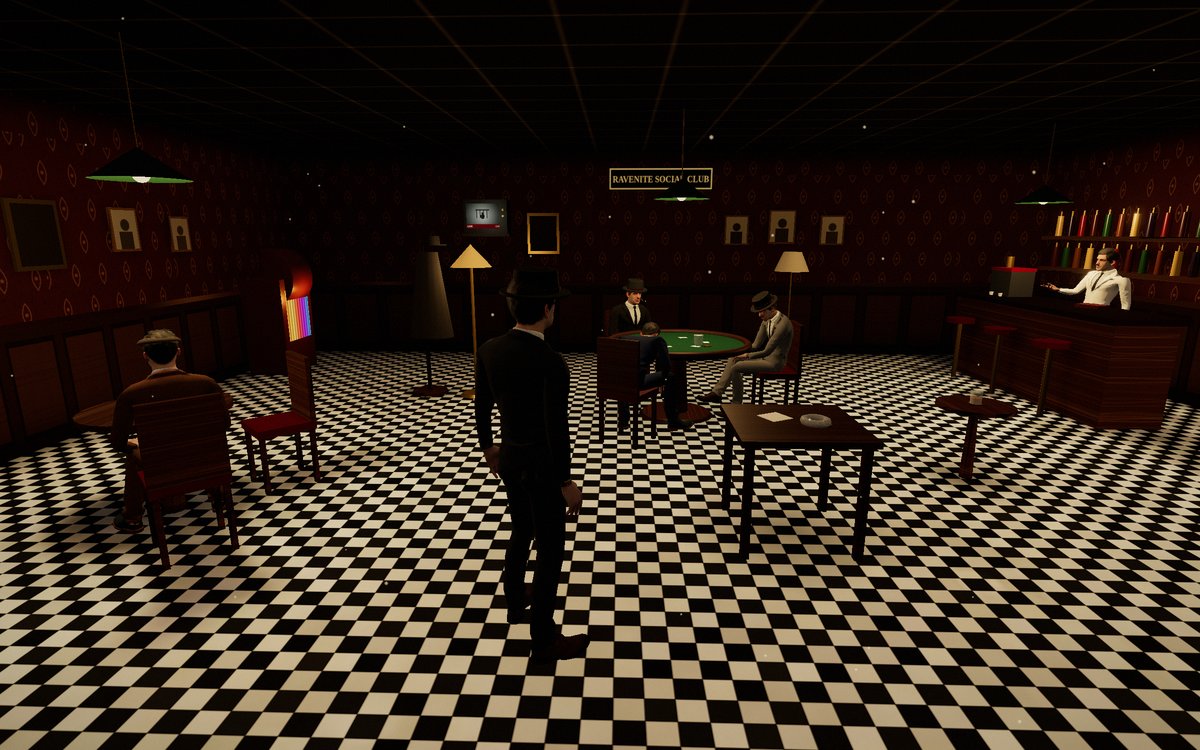
The Ravenite escape room
247 Mulberry Street, December 1989. The FBI hit the building next. Walk the scene in 3D, read the real evidence and crack the padlock before the clock runs out.
Play free in your browser →No download. Works on phone and desktop.or get the app: App Store · Google PlayOrigins: the Heaven and Earth Society
When the Manchus conquered China in 1644 and founded the Qing dynasty, resistance to the new rulers led to secret societies dedicated to restoring the old Ming dynasty. Their slogan was “Oppose the Qing and restore the Ming”. By the 1700s the most important of these was the Tiandihui, the Heaven and Earth Society, also known as the Hongmen, which historians regard as the most direct ancestor of the triads.

Triad tradition tells a founding story involving loyalist monks of the Shaolin Temple. Modern historians treat this as legend rather than history. What is clear is that the societies offered poor and mobile men something real: sworn brotherhood, mutual help in hard times, and protection.
Members joined through an initiation ceremony with an oath of loyalty and strict rules, and betraying the society’s secrets was punishable by death. The English word “triad” comes from one of the society’s names, San He Hui, the Three Harmonies Society, standing for the union of heaven, earth and man. The number three, and a triangle, became its symbols.
Rebels and revolutionaries
Throughout the Qing period the authorities treated the societies as subversive. In the 1850s triad uprisings threatened Shanghai and Xiamen (Amoy), and many members joined or helped the Taiping rebels in their long war against the Qing. Triad networks also played a part in the revolutionary movement that brought down the Qing dynasty in 1911–12.
The fall of the Qing removed the societies’ political purpose and much of their support. Many of the brotherhoods turned more fully to crime: protection rackets, gambling, opium and prostitution. In the Republic of China era some were used by the Kuomintang (Nationalist) government against its political enemies.
The move to Hong Kong
Triad societies had been present in Hong Kong almost from the start of British rule, and colonial law targeted them from the 19th century onwards. The great change came in 1949. When the Communist Party took power on the mainland, it suppressed secret societies, and many triad members fled to Hong Kong, Macau, Taiwan and overseas.
Hong Kong became the triad capital. In the decades after the war, according to the South China Morning Post, police estimated that dozens of triad gangs were active in the colony, and Sun Yee On and 14K largely controlled the lawless Kowloon Walled City from the 1950s to the 1970s.
The major groups
14K began as a pro-Kuomintang society in Canton (Guangzhou). According to the criminologist Henry Prunckun, it was founded by the Kuomintang general Kot Siu-wong at 14 Po Wah Road. Unlike most triads, it has no auspicious name; the “K” has been explained as standing for Kot, for the Kuomintang, or for Kiu Kiang Street in Kowloon. It grew into one of the largest Hong Kong triads, with a presence overseas.
Sun Yee On is the best known of the Chiu Chow triads, groups rooted in Hong Kong’s Chiu Chow (Teochew) community, and is regularly named as one of the territory’s most powerful.
Wo Shing Wo is the best known of the Wo group of societies, one of Hong Kong’s main triad families.
Other groups often named in reporting include Wo Hop To, which spread to San Francisco, and the Big Circle Gang. In Taiwan, the Bamboo Union is described as the island’s largest triad-style group.
Ranks and numbers
Traditional triads used a hierarchy of numbered ranks, based on Chinese numerology:

- 489: the Mountain Master or Dragon Head, the leader
- 438: the Deputy Mountain Master or Incense Master, in charge of ritual
- 426: the Red Pole, the enforcer or fighting leader
- 415: the White Paper Fan, the adviser on business and money
- 432: the Straw Sandal, the messenger between units
- 49: the ordinary member or soldier
Researchers now say the old ranks are largely gone, and most modern triad groups have a loose, flat structure with no central command. Individual bosses often have limited control over what lower-ranking members do. That is a key difference from the tightly ranked families of the Italian-American Mafia, which we cover in how a Mafia family is structured.
Crime and the law
Documented triad activity has included extortion and protection rackets, illegal gambling, drug trafficking, prostitution, counterfeiting, fraud, people smuggling and money laundering. By the 1970s triad-linked protection rackets were reported in British cities with large Chinese communities, and triad-linked gangs have since been reported across Europe, North America and Australia.
Hong Kong has responded with some of the toughest anti-triad laws anywhere. The Societies Ordinance bans triad societies, and under it it is an offence even to claim to be a triad member, whether or not the claim is true. The Organized and Serious Crimes Ordinance, passed in 1994, gave police and prosecutors stronger powers to investigate, confiscate criminal proceeds and increase sentences for crimes connected with triads.
Legacy
The triads are one of the oldest continuous traditions in organised crime. They began as secret brotherhoods with a political cause, and over three centuries they became a byword for organised crime in Hong Kong. Their oaths, rituals and numbered ranks still shape how they are understood, even as the groups themselves have become looser and harder to define. For the wider vocabulary of organised crime, see our ultimate Mafia glossary.
Related reading: How a Mafia family is structured · The ultimate Mafia glossary
FAQs
What are the triads?
The triads are Chinese criminal societies descended from secret brotherhoods of Qing-dynasty China, especially the Heaven and Earth Society. Today they are most closely associated with Hong Kong.
Why are they called triads?
The name comes from San He Hui, the Three Harmonies Society, which stands for the union of heaven, earth and man. The number three and the triangle became the societies’ symbols.
When did the triads start?
They grew from secret societies formed to oppose the Qing dynasty, which ruled China from 1644. The Heaven and Earth Society, their main ancestor, was active by the 1700s.
What are the biggest triads?
The best-known Hong Kong triads are 14K, Sun Yee On and Wo Shing Wo. Others often named include Wo Hop To and the Big Circle Gang.
What does 426 mean in a triad?
426 is the traditional code for the Red Pole, the enforcer or fighting leader. 489 is the Mountain Master (the leader) and 49 an ordinary member.
Is it illegal to be a triad member in Hong Kong?
Yes. Triad societies are banned under Hong Kong’s Societies Ordinance, and it is an offence even to claim to be a member of one.
Why did the triads move to Hong Kong?
After the Communist Party took power in mainland China in 1949, it suppressed secret societies, and many triad members fled to British-ruled Hong Kong, as well as Macau, Taiwan and overseas.