



What Was the National Crime Syndicate?
The National Crime Syndicate was the loose, coast-to-coast alliance of American gangsters that took shape at the end of Prohibition. It brought Italian, Jewish and Irish crime groups that had spent the 1920s killing each other into a single working partnership. Its architects were Charles “Lucky” Luciano and Meyer Lansky, and for the next thirty years it shared out gambling, bootlegging, labor rackets and narcotics from New York to Chicago, Miami, Havana and Las Vegas.
The Syndicate never had a headquarters or a membership list. It was a set of agreements between bosses who had decided that cooperation paid better than war. Here is how it was built, who ran it, how it kept order and how it came undone.
Quick facts
- Formed: roughly 1929 to 1934, beginning with the Atlantic City Conference of May 1929
- Founders: Lucky Luciano and Meyer Lansky, with Frank Costello, Johnny Torrio, Bugsy Siegel, Lepke Buchalter and others
- Governing body: the Commission, created by Luciano in 1931 for the Italian-American families
- Enforcement arm: Murder, Inc., based in Brownsville, Brooklyn
- Exposed by: the Murder, Inc. trials (1940 to 1941), the Kefauver Committee (1950 to 1951) and the Apalachin raid (1957)
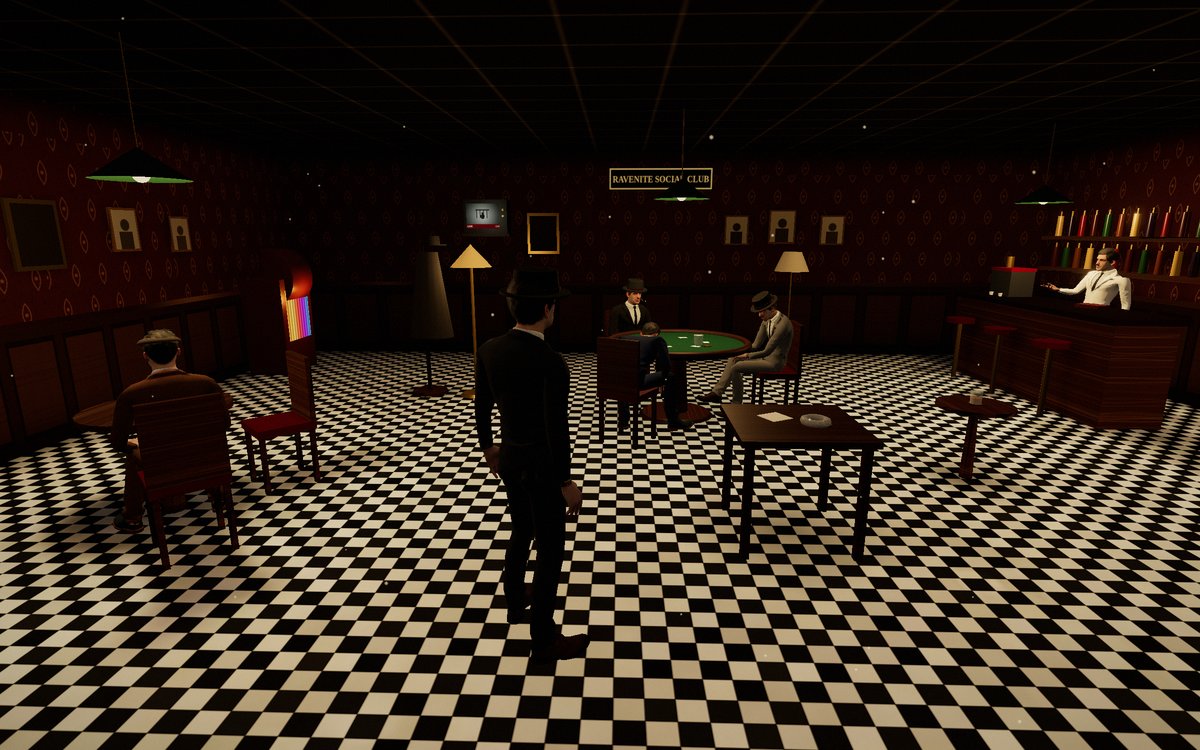
The Ravenite escape room
247 Mulberry Street, December 1989. The FBI hit the building next. Walk the scene in 3D, read the real evidence and crack the padlock before the clock runs out.
Play free in your browser →No download: it plays in your browser, best on a computer. Also on iPhone and Android.Before the Syndicate: Prohibition and gang wars
Prohibition, which began in January 1920, turned street gangs into national businesses. Liquor had to be bought abroad, landed on beaches, trucked across state lines and sold in thousands of speakeasies. No single gang could do all of that, but each fought hard for its own piece. Chicago’s beer wars, which ended with the St. Valentine’s Day Massacre in February 1929, showed how costly the fighting had become.
A younger generation of gangsters saw it differently. Luciano, Lansky, Costello and Siegel had worked together since their teens, crossing ethnic lines that older bosses refused to cross. To them, the old-world Sicilian “Mustache Petes” were bad for business.
The Atlantic City Conference, May 1929
In May 1929 the leading bootleggers of the East Coast and Midwest met for several days in Atlantic City, hosted by the boardwalk’s political boss, Enoch “Nucky” Johnson. Those reported to have attended included Johnny Torrio, Lucky Luciano, Meyer Lansky, Frank Costello, Al Capone, Longy Zwillman and Moe Dalitz. It is often described as the first national gathering of organized crime.
The bosses talked about ending the gang wars, carving up territory and preparing for the day Prohibition would end. Torrio, who had handed Chicago to Capone, pushed hardest for a cooperative model. Read the full story of the Atlantic City Conference.
The Castellammarese War and the end of the old bosses
Inside the Italian underworld, cooperation had to wait. From 1930 to 1931 New York’s two most powerful bosses, Joe Masseria and Salvatore Maranzano, fought the Castellammarese War. Luciano was Masseria’s top lieutenant, but he quietly made a deal with the other side.
On April 15, 1931, Masseria was shot dead at the Nuova Villa Tammaro restaurant in Coney Island (how Joe Masseria was killed). Maranzano declared himself capo di tutti capi, the boss of all bosses. Five months later, on September 10, 1931, four men posing as tax agents walked into his office at 230 Park Avenue and killed him (Salvatore Maranzano, the boss of bosses).
Luciano’s Commission
With both old bosses gone, Luciano refused the title of boss of all bosses. Instead he set up the Commission, a board on which the heads of New York’s Five Families sat alongside the bosses of Chicago and Buffalo. It settled disputes, approved new members and decided when a boss could be killed.
The Commission governed the Italian-American Mafia. The wider Syndicate went further: it was how the Mafia families did business with Lansky, Siegel, Buchalter, Zwillman, Dalitz and the other Jewish and Irish bosses who controlled gambling, the garment district and the unions.
Murder, Inc.: the Syndicate’s enforcers
A national partnership needed a way to deal with informers and rule-breakers without starting new wars. The answer was a crew of contract killers based in Brownsville, Brooklyn, led by Louis “Lepke” Buchalter and Albert Anastasia. The press later called them Murder, Inc.
Their hitmen waited for work in the back of Midnight Rose’s candy store on Saratoga Avenue. They killed only on orders that had been approved at the top, often travelling to other cities so that local police had no motive to work with. In 1935 the bosses ordered the murder of their own man, Dutch Schultz, after he insisted on killing the prosecutor Thomas Dewey. Schultz was shot at the Palace Chop House in Newark that October.
The crew fell apart in 1940 when Abe “Kid Twist” Reles began talking to the Brooklyn District Attorney. Lepke was executed at Sing Sing in March 1944, the only top American mob boss ever put to death by the state. More: Murder, Incorporated, the Mafia’s enforcement arm.
Gambling, Havana and Las Vegas
When Prohibition ended in December 1933, the Syndicate moved into gambling. Lansky and Costello ran illegal casinos and slot machines from Saratoga to New Orleans, and Lansky built close ties with Cuba’s Fulgencio Batista.
Luciano went to prison in 1936 and was deported to Italy in 1946. That December he slipped into Cuba, and the bosses met at the Hotel Nacional in what became known as the Havana Conference. One item on the agenda was Bugsy Siegel’s Flamingo hotel in Las Vegas, which was badly over budget. Siegel was shot dead in Beverly Hills in June 1947. The casino survived, and Las Vegas became the Syndicate’s most profitable project.
How the public found out
For years officials played down the idea of a national crime organization. That changed with the Senate’s Kefauver Committee in 1950 and 1951, whose televised hearings showed millions of Americans the nervous hands of Frank Costello and concluded that a nationwide crime syndicate existed (the Kefauver Hearings). In 1951 the former Murder, Inc. prosecutor Burton Turkus published a bestselling account of the case, which helped make “the Syndicate” a household phrase.
Then, in November 1957, New York state troopers raided a meeting of dozens of mob bosses at Joseph Barbara’s estate in Apalachin, New York. J. Edgar Hoover’s FBI could no longer deny that organized crime was organized. In 1963 Joseph Valachi testified to the McClellan Committee about La Cosa Nostra from the inside.
What happened to the National Crime Syndicate?
The Syndicate was never formally dissolved. It faded as its founders died, were jailed or were deported, and as federal pressure grew. Luciano died at Naples airport in 1962. Lansky lived until 1983 in Miami Beach, and despite decades of investigation he served only a few months in jail. The Commission carried on until the 1980s, when the RICO Act and the 1985 to 1986 Commission Case sent the heads of New York’s families to prison. For the full picture, see what happened to the Five Families.
The best books on What Was the National Crime Syndicate?
As an Amazon Associate, NCS earns from qualifying purchases.
Frequently asked questions
Who started the National Crime Syndicate?
Lucky Luciano and Meyer Lansky are credited as its founders, with Frank Costello, Johnny Torrio, Bugsy Siegel and Lepke Buchalter among the early partners.
Is the National Crime Syndicate the same as the Mafia?
No. The Mafia, or Cosa Nostra, was the Italian-American part of it, governed by the Commission. The Syndicate was the wider alliance between the Mafia families and Jewish, Irish and other crime groups.
What was Murder, Inc.?
The Syndicate’s enforcement arm: a crew of Brooklyn hitmen under Lepke Buchalter and Albert Anastasia who carried out killings ordered by the bosses during the 1930s.
Was Al Capone part of the National Crime Syndicate?
Capone is reported to have attended the 1929 Atlantic City Conference, but he was jailed for tax evasion in 1931. The Chicago Outfit took its place in the Syndicate under Frank Nitti and later Tony Accardo.
Want to stand where it happened? Five Families: Escape Rooms rebuilds real mob crime scenes, from Midnight Rose’s to Maranzano’s office at 230 Park Avenue, in 3D. Free on iOS, Android and the web.