

Falcone, Borsellino and the Maxi Trial

The Maxi Trial (maxiprocesso) was the biggest trial ever brought against the Sicilian Mafia. It opened in Palermo on 10 February 1986, with around 475 defendants, and on 16 December 1987 the court convicted more than 330 of them, handing down 19 life sentences and 2,665 years in prison in total. For the first time, an Italian court accepted that Cosa Nostra existed as a single organisation with a hierarchy and a ruling Commission.
🎁 The NCS Christmas Gift Guide
Gifts for the
Mob-History Fan
Real gangsters, gold Art Deco. Printed to order and shipped from a print partner near them.
Shop the gift guide →

Order printed gifts by 10 December for Christmas · Ships worldwide
The case was built by a small team of Palermo magistrates led in the public eye by Giovanni Falcone and Paolo Borsellino. When Italy’s Supreme Court upheld the verdicts in January 1992, the Mafia answered with violence: Falcone was murdered on 23 May 1992 and Borsellino on 19 July 1992.

Quick facts
| Trial opened | 10 February 1986, Palermo |
| Courtroom | A bunker courtroom built inside the walls of the Ucciardone prison |
| Defendants | Around 475 (sources give 475 or 476) |
| Presiding judge | Alfonso Giordano |
| Verdict | 16 December 1987 |
| Outcome | More than 330 convicted, 114 acquitted, 19 life sentences, 2,665 years in total |
| Upheld | 30 January 1992, by the Supreme Court of Cassation |
| Aftermath | Falcone killed 23 May 1992 at Capaci; Borsellino killed 19 July 1992 in Via D’Amelio |
The Ravenite escape room
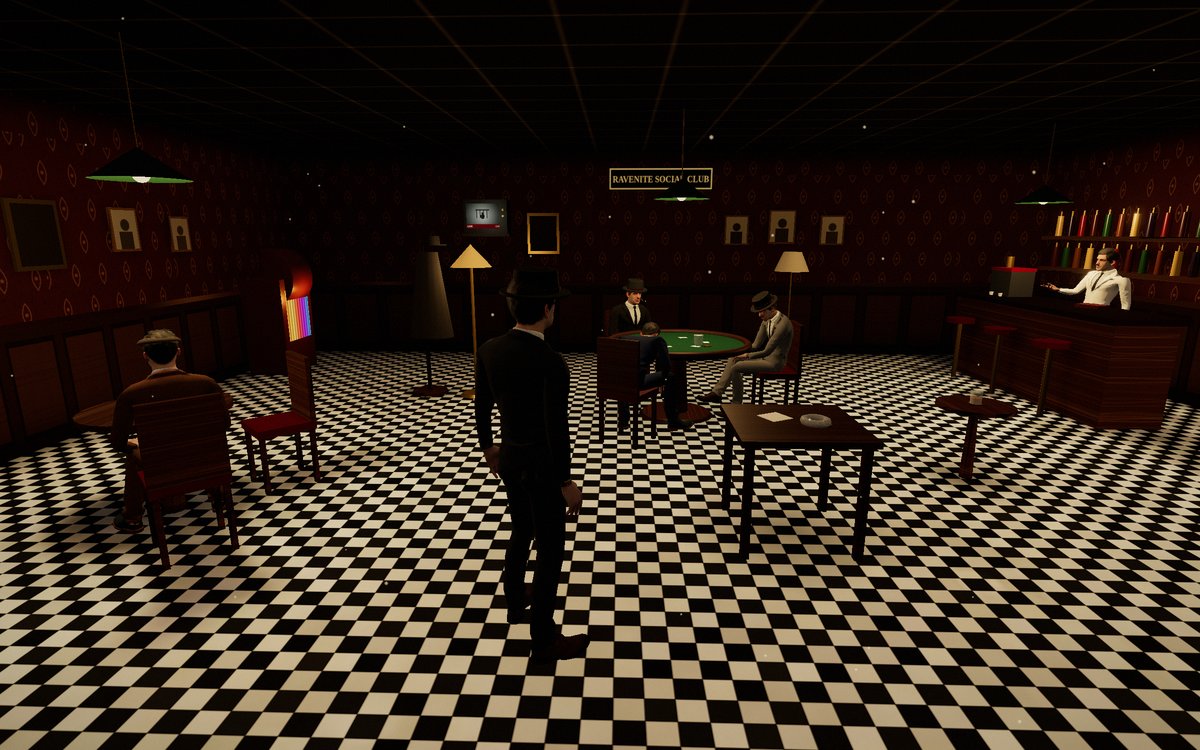
247 Mulberry Street, December 1989. The FBI hit the building next. Walk the scene in 3D, read the real evidence and crack the padlock before the clock runs out.
Play free in your browser →No download. Works on phone and desktop.or get the app: App Store · Google PlayThe antimafia pool
In the early 1980s Palermo was in the middle of the Second Mafia War, in which the Corleonesi of Totò Riina were wiping out rival families. Investigating magistrates in the city formed a “pool”, a team that shared information so that no single judge carried a case, or a target on his back, alone. Its members were Giovanni Falcone, Paolo Borsellino, Giuseppe Di Lello and Leonardo Guarnotta.
Their central idea was to treat the Mafia as one organisation with a single leadership, rather than as a series of unrelated crimes committed by separate gangs.
Buscetta talks
The breakthrough came from Tommaso Buscetta, a senior man of honour whose family and allies had been devastated by the Corleonesi. He was arrested in Brazil in 1983 and extradited to Italy in 1984, and he chose to cooperate. Over weeks of interviews he explained to Falcone how Cosa Nostra was organised: the families, the bosses, the Commission and the rules. Other pentiti (collaborators) followed, and arrest warrants were issued in their hundreds.
For how the structure Buscetta described actually works, see our guide to how a Mafia family is structured.
The trial in the bunker
No ordinary courtroom could hold a trial of this size, so the state built one. The bunker courtroom, raised inside the walls of the Ucciardone prison in about six months held the defendants in cages along its walls. Around 475 people were charged; more than a hundred were tried in their absence, among them Riina and Bernardo Provenzano, both still fugitives.
Alfonso Giordano presided, and the prosecution case was led by Giuseppe Ayala. Buscetta gave evidence in person, and the proceedings ran for some 20 months.
The verdict
On 16 December 1987 the court gave its verdict. More than 330 defendants were convicted (accounts of the exact figure differ), 114 were acquitted, and 19 bosses were given life sentences, including Michele Greco and, in their absence, Riina and Provenzano. The sentences added up to 2,665 years.
The appeal court reduced some sentences and overturned a number of convictions in 1990. Then, on 30 January 1992, the Supreme Court of Cassation confirmed the original convictions and set aside most of the appeal acquittals. The “Buscetta theorem”, the idea that Cosa Nostra was one organisation whose leaders were responsible for its crimes, was now settled law.
The 1992 bombings
The Mafia’s response came within months. On 23 May 1992, as Falcone was being driven from Palermo airport into the city after a flight from Rome, a large bomb planted beneath the A29 motorway near Capaci exploded under his convoy. Falcone, his wife Francesca Morvillo, and three police officers of his escort, Vito Schifani, Rocco Dicillo and Antonio Montinaro, were killed.

Fifty-seven days later, on 19 July 1992, a car bomb exploded in Via D’Amelio in Palermo as Paolo Borsellino arrived to visit his mother. Borsellino was killed along with five police officers: Agostino Catalano, Walter Cosina, Emanuela Loi, Vincenzo Li Muli and Claudio Traina.
Justice and legacy
The murders shocked Italy and hardened the state’s response. Tougher anti-Mafia laws followed, and on 15 January 1993 Riina was arrested in Palermo after 23 years on the run. Prosecutors described him as the mastermind of both bombings. In trials held in Caltanissetta in the late 1990s, Riina and other bosses were given life sentences; Giovanni Brusca, who later became a state witness, was convicted for his part in the Capaci attack. Matteo Messina Denaro was later sentenced to life in his absence over the bombings; he was arrested in January 2023 and died later that year.
Today Falcone and Borsellino are remembered as national figures in Italy, and the Maxi Trial is seen as the moment the state proved the Mafia could be beaten in court. New to some of the terms? Our ultimate Mafia glossary explains them.
Related reading: Totò Riina · How a Mafia family is structured · The ultimate Mafia glossary
Step into mob history yourself: try our real crime-scene Five Families escape rooms in your browser.
FAQs
What was the Maxi Trial?
The Maxi Trial was a mass trial of Sicilian Mafia members held in a bunker courtroom in Palermo from February 1986 to December 1987. Around 475 people were charged, and more than 330 were convicted.
Who were Falcone and Borsellino?
Giovanni Falcone and Paolo Borsellino were Palermo magistrates and members of the antimafia pool that built the Maxi Trial case. Both were murdered by the Mafia in 1992.
What was the verdict of the Maxi Trial?
On 16 December 1987 the court handed down 19 life sentences and 2,665 years in prison in total. The convictions were confirmed by the Supreme Court of Cassation on 30 January 1992.
Who was Tommaso Buscetta?
Buscetta was a senior Mafia figure who began cooperating with Falcone after his extradition from Brazil in 1984. His account of how Cosa Nostra was organised was the backbone of the prosecution.
When were Falcone and Borsellino killed?
Falcone was killed by a motorway bomb near Capaci on 23 May 1992. Borsellino was killed by a car bomb in Via D’Amelio, Palermo, on 19 July 1992.
Who was behind the 1992 bombings?
Prosecutors described Totò Riina, the head of the Corleonesi, as the mastermind. He and other bosses were given life sentences in the trials that followed.