



Lucky Luciano: Biography of the Man Who Built the American Mafia
Quick answer
Charles “Lucky” Luciano (1897–1962) was the Sicilian-born New York gangster who created the modern American Mafia. He arranged the murders of the two old bosses, Joe Masseria and Salvatore Maranzano, in 1931, set up the Commission that governed the Five Families, and built the National Crime Syndicate with Meyer Lansky. Convicted in 1936, he was deported to Italy in 1946 and died of a heart attack at Naples airport in 1962.
Lucky Luciano: quick facts
| Born | Salvatore Lucania, 24 November 1897, Lercara Friddi, Sicily |
|---|---|
| Died | 26 January 1962, Naples International Airport, Italy (aged 64) |
| Known for | Founding the Commission and the modern Five Families; co-founding the National Crime Syndicate |
| Family | Boss of the family later known as the Genovese crime family |
| Partners | Meyer Lansky, Bugsy Siegel, Frank Costello, Vito Genovese |
| Convicted | 1936, compulsory prostitution, 30 to 50 years |
| Buried | St. John’s Cemetery, Middle Village, Queens, New York |
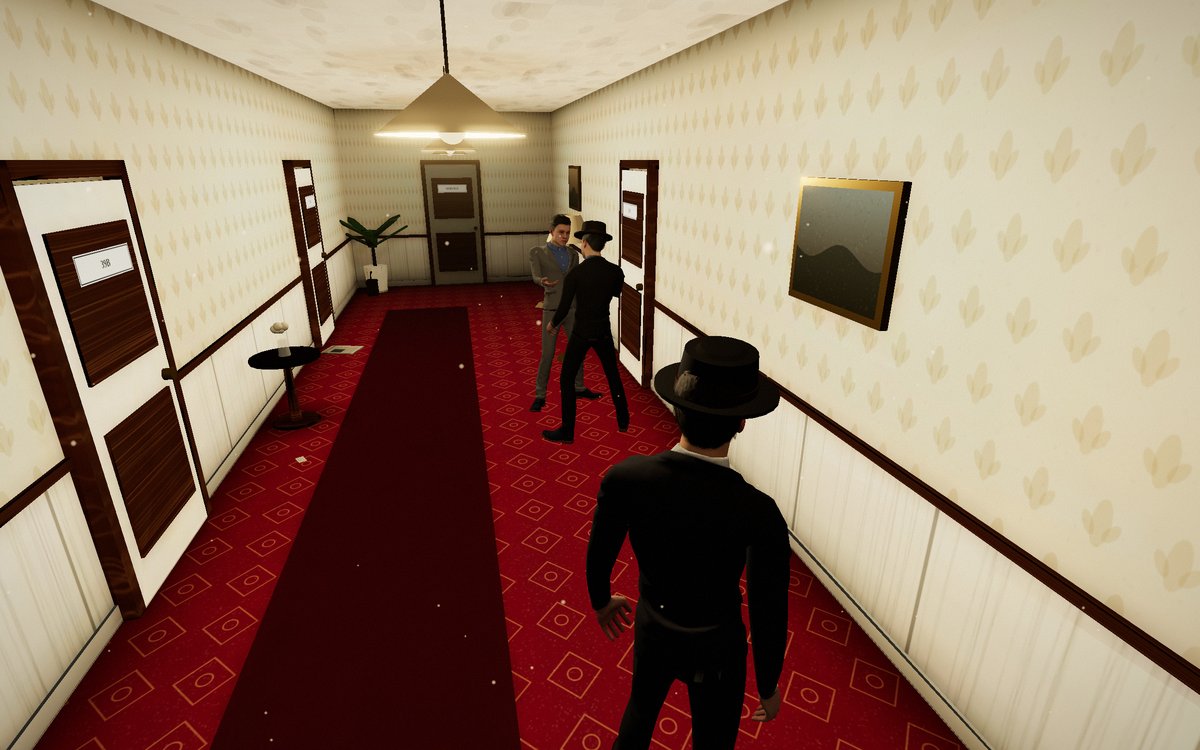
The Waldorf Suite escape room
Waldorf-Astoria, the 1930s. Lucky Luciano runs New York from the 39th floor. Walk the scene in 3D, read the real evidence and crack the padlock before the clock runs out.
Play the room →No download: it plays in your browser, best on a computer. Also on iPhone and Android.From Sicily to the Lower East Side
Salvatore Lucania was born in Lercara Friddi, a sulphur-mining town in the hills south of Palermo. In 1906, when he was eight, his family emigrated to New York and settled on the Lower East Side of Manhattan, one of the most crowded neighbourhoods in the world.
He hated school and was soon earning money on the streets, charging other boys for protection on their way to class. One of the boys who refused to pay was a small, sharp Jewish kid from Grand Street called Meyer Lansky. Instead of fighting, the two became friends, and with Lansky’s partner Benjamin “Bugsy” Siegel they formed the partnership that would shape organised crime for the next forty years. In 1916 Lucania served a few months in a reformatory for selling heroin, his first and, for twenty years, his only serious stretch behind bars. Around this time he began calling himself Charlie Lucky.
Prohibition and Joe the Boss
Prohibition, from 1920, made Luciano rich. With Lansky, Siegel and Frank Costello he ran liquor into New York, learning business from the gambler Arnold Rothstein, who taught the young gangsters to dress well, bribe wisely and think in terms of markets rather than turf. Luciano rose to become the top lieutenant of Giuseppe “Joe the Boss” Masseria, the most powerful Mafia leader in the city.
In October 1929 Luciano was abducted, beaten, slashed across the face and dumped on a beach on Staten Island. He survived, which became one explanation for the nickname “Lucky”, and the attack left him with the scar and drooping right eye seen in his later photographs. Who ordered it has never been settled.
The Castellammarese War and two murders
From 1930 Masseria fought the rival Sicilian boss Salvatore Maranzano in the Castellammarese War. Luciano thought both men belonged to the past. On 15 April 1931 he took Masseria to lunch at the Nuova Villa Tammaro restaurant in Coney Island, stepped away from the table, and gunmen walked in and killed him.
Maranzano declared himself boss of all bosses and began plotting against Luciano. Luciano struck first. On 10 September 1931 four men posing as tax agents killed Maranzano in his office at 230 Park Avenue. The full story is in Salvatore Maranzano: the boss of all bosses and how he was killed.
The Commission and the Syndicate
At 33 Luciano was the most powerful gangster in New York, and he did something no one expected: he refused the title of boss of all bosses. Instead he created the Commission, a board on which the heads of the Five Families and the bosses of Chicago and Buffalo settled disputes by agreement. Beyond the Mafia, he and Lansky built working partnerships with Jewish and Irish gangs across the country, the alliance known as the National Crime Syndicate.
He lived in style, in a suite in the Waldorf-Astoria Towers under the name Charles Ross, and ran gambling, loansharking, the garment district rackets and narcotics through a family that would later carry the name of his underboss, Vito Genovese.
Thomas Dewey and the 1936 conviction
In 1935 Dutch Schultz wanted to murder the special prosecutor Thomas E. Dewey. The Commission refused, and when Schultz insisted, it had him killed instead. Dewey turned his attention to Luciano. In 1936 he charged him with running a prostitution ring, and after a trial built largely on the evidence of prostitutes and madams, Luciano was convicted on 62 counts of compulsory prostitution in June 1936 and sentenced to 30 to 50 years. He went to Clinton prison at Dannemora, near the Canadian border.
The wartime deal and deportation
In 1942, with America at war and the liner Normandie burned out in New York harbour, Naval Intelligence asked the Mafia to keep the waterfront safe from sabotage. The arrangement, later called Operation Underworld, ran through Luciano. In January 1946 Governor Dewey commuted his sentence on condition that he be deported. In February 1946 Luciano sailed from Brooklyn for Italy, never to return to the United States alive.
By October he had slipped into Cuba, and in December 1946 he hosted the leaders of American organised crime at the Hotel Nacional in what became known as the Havana Conference. When Washington found out, it threatened to cut off Cuba’s supply of medical narcotics, and within weeks Luciano was on a ship back to Italy.
Exile in Naples
Luciano spent his last fifteen years in Naples, watched by the Italian police and accused, without ever being charged, of directing heroin shipments to the United States. He lived with the former dancer Igea Lissoni until her death in 1959. From a distance he is said to have helped set up the 1959 narcotics conviction of Vito Genovese, who had taken over his old family.
Death at Naples airport
On 26 January 1962 Luciano went to Naples airport to meet the American producer Martin Gosch, who wanted to make a film of his life. He collapsed with a heart attack and died in the terminal, aged 64. His body was flown to New York and buried in the family vault at St. John’s Cemetery in Queens. More: how did Lucky Luciano die?
Lucky Luciano’s legacy
The structure Luciano built in 1931, five New York families and a Commission above them, lasted for more than half a century, until the RICO prosecutions of the 1980s. In 1998 TIME magazine included him in its list of the 100 most important people of the twentieth century, among the “builders and titans”, the only gangster on the list. For his money, see Lucky Luciano’s net worth; for the lesser-known stories, 10 things you didn’t know about Lucky Luciano; and for the women in his life, Gay Orlova.
The best books on Lucky Luciano
As an Amazon Associate, NCS earns from qualifying purchases.
Frequently asked questions
What was Lucky Luciano’s real name?
Salvatore Lucania. He used the name Charles Luciano from his late teens.
Why was he called Lucky?
The most popular explanation is that he survived being abducted, beaten and slashed in 1929, something few men in his world did. He was also known as Charlie Lucky before that, and some accounts link the name to his luck at gambling.
What did Lucky Luciano do?
He ended the Castellammarese War by having both old bosses killed, organised New York’s Mafia into five families under a governing Commission, and built the multi-ethnic National Crime Syndicate with Meyer Lansky.
How long was Lucky Luciano in prison?
About ten years. He was convicted in 1936 and released for deportation in 1946.
Where is Lucky Luciano buried?
St. John’s Cemetery in Middle Village, Queens, New York.
Step into his world: the Waldorf Suite escape room on Five Families puts you in Luciano’s rooms at the Waldorf-Astoria in the 1930s.