

The Lucchese Crime Family

The Lucchese crime family is one of the Five Families of the New York Mafia. It grew out of a Bronx and East Harlem gang run by Gaetano “Tommy” Reina in the 1920s and takes its name from Gaetano “Tommy” Lucchese, who led it from 1951 until his death in 1967. For most of the 20th century it was the quietest and, by many accounts, the most profitable of the New York families, with its hands in the garment district, trucking, construction and the air-freight business at Kennedy Airport.
That reputation ended in the late 1980s, when a new leadership under Vittorio “Vic” Amuso and Anthony “Gaspipe” Casso turned the family’s violence inwards. Within a few years both were in federal custody, senior members were queuing up to testify, and the family has been fighting prosecutors ever since. This is its full story, boss by boss.
For a year-by-year list of who held each post, see our Lucchese crime family leadership timeline.

Quick facts
| Founded | 1920s, under Gaetano Reina (Bronx and East Harlem) |
| Named after | Gaetano “Tommy” Lucchese, boss 1951–1967 |
| Base | The Bronx, East Harlem, later Brooklyn, Long Island and New Jersey |
| Main rackets | Garment district trucking, Kennedy Airport freight, construction, loansharking, gambling |
| Biggest blow | 1986 Commission Trial: boss Anthony Corallo sentenced to 100 years |
| Official boss | Vittorio “Vic” Amuso, since the late 1980s; serving life since 1993 |
| Notable turncoats | Alphonse D’Arco (1991), Anthony “Gaspipe” Casso (1994) |
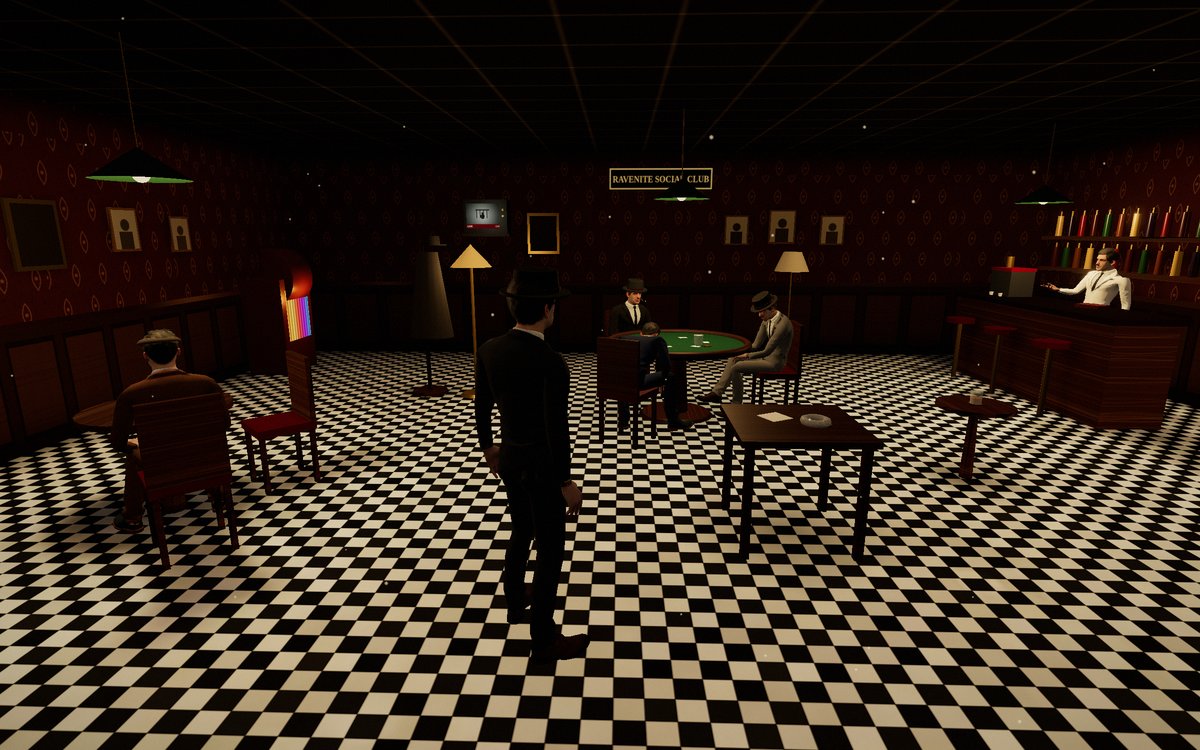
The Ravenite escape room
247 Mulberry Street, December 1989. The FBI hit the building next. Walk the scene in 3D, read the real evidence and crack the padlock before the clock runs out.
Play free in your browser →No download. Works on phone and desktop.or get the app: App Store · Google PlayOrigins: the Reina family
The family began as a crew led by Gaetano Reina, who controlled the ice trade in the Bronx in the 1920s. Reina’s group was one of several Sicilian and southern Italian gangs operating under the loose authority of Joe Masseria.
On 26 February 1930, Reina was shot dead in the Bronx. Most accounts say the killing was approved by Masseria, and it helped push the city’s Italian gangs into the Castellammarese War. Masseria installed Joseph Pinzolo in Reina’s place, but Pinzolo was himself killed in September 1930. Reina’s loyalists, led by Tom Gagliano and his close ally Tommy Lucchese, sided with Salvatore Maranzano against Masseria. Read more: Joe Masseria, Salvatore Maranzano and the Castellammarese War.
The Gagliano era (1930–1951)
When the war ended in 1931, with Masseria and then Maranzano both dead, Lucky Luciano set up the Commission and the five New York families took the shape they still have. Tom Gagliano was confirmed as boss of the old Reina family, with Tommy Lucchese as his underboss.
Gagliano kept a low profile, and much of the day-to-day work fell to Lucchese, who built the family’s grip on the garment district: trucking firms, contractors and unions in Manhattan’s clothing trade all paid, one way or another. Gagliano died in 1951, and Lucchese took over. Read more: Lucky Luciano and how a Mafia family is structured.
The Tommy Lucchese era (1951–1967)
Tommy Lucchese, known as “Three-Finger Brown” after an industrial accident that cost him part of a hand, was the ideal mob boss for the post-war years. He was a businessman first, with legitimate dress companies, political friends and no interest in publicity. Under him the family expanded into trucking, construction, bakeries and the rackets around Idlewild, the airport later renamed John F. Kennedy International. By the time of his death the family had around 200 made members, according to later accounts.

Lucchese was also a key player in the politics of the Commission. He was a close ally of Carlo Gambino, and in 1962 his daughter married Gambino’s son Thomas, tying the two families together for a generation. Read more: Tommy Lucchese and Carlo Gambino.
Lucchese died of a brain tumour on 13 July 1967 at his home on Long Island.
Tramunti and Corallo (1967–1986)
After Lucchese’s death, Carmine Tramunti led the family. His time in charge was short: in 1974 he was jailed for 15 years for helping to finance a heroin-trafficking operation, and he died in prison in October 1978.

His successor was Anthony “Tony Ducks” Corallo, a veteran of the garment and trucking rackets who had earned his nickname by repeatedly ducking convictions. Corallo ran the family through the late 1970s and early 1980s and pushed it further into construction and private waste collection on Long Island.
It was during this period, on 11 December 1978, that a crew of Lucchese associates carried out the Lufthansa cargo robbery at Kennedy Airport, one of the largest cash thefts in US history at the time. Read more: the deadliest mob hits.
Corallo’s undoing was a car. In the early 1980s investigators from the New York State Organized Crime Task Force planted a bug in the Jaguar of his driver, Salvatore Avellino, and recorded Corallo talking openly about family business. Those tapes became central to the federal Commission Trial. On 19 November 1986, Corallo, his underboss and his consigliere were convicted alongside the leaders of the Genovese and Colombo families, and in January 1987 Corallo was sentenced to 100 years. He died in prison in 2000. Read more: Anthony Corallo, the last boss of the Lucchese crime family.
Amuso and Casso: the family turns on itself (1986–1994)
From prison, Corallo chose Vittorio “Vic” Amuso as boss, with Anthony “Gaspipe” Casso as his underboss. The two men were close allies and ruled through fear. In 1986 they joined the Genovese leadership in a plot against John Gotti over the murder of Paul Castellano; a car bomb meant for Gotti killed his underboss, Frank DeCicco, in April 1986. Read more: John Gotti, Paul Castellano and Vincent Gigante.
In 1990 both men were named in the so-called Windows case, a scheme to rig contracts for replacement windows in New York City public housing. They went into hiding before they could be arrested and ran the family on the run, ordering the killings of members they suspected of disloyalty. Prosecutors later said Casso had two serving New York police detectives, Louis Eppolito and Stephen Caracappa, passing him information; both were convicted in federal court in 2006.
The purges backfired. Amuso was captured in Scranton, Pennsylvania, in July 1991, and in September 1991 his acting boss, Alphonse D’Arco, fearing he was next on the list, walked into an FBI office and agreed to testify. He is generally described as the first acting boss of a New York family to become a government witness. Amuso was convicted of racketeering and murder in 1992 and sentenced to life in January 1993. Casso was caught in New Jersey in January 1993, began cooperating in 1994, was later dropped as a witness and was sentenced to 455 years, in effect a life term. He died in federal custody in December 2020. Read more: Anthony “Gaspipe” Casso.
The long federal takedown (1994–2017)
With Amuso in prison but still boss in name, the family was run by acting bosses and ruling panels, and one after another they were indicted. In 2010 prosecutors in New Jersey charged more than 30 people linked to the family’s New Jersey faction with gambling, loansharking and other crimes.
The heaviest recent blow came on 31 May 2017, when federal prosecutors in Manhattan charged the family’s acting boss, Matthew Madonna, and underboss, Steven Crea, along with capos, soldiers and associates, with racketeering. Both men were also charged with ordering the 2013 murder of family associate Michael Meldish in the Bronx. In November 2019 a jury convicted them, and in 2020 Madonna and Crea were both sentenced to life in prison.
The Lucchese family today
Vic Amuso remains the official boss from his federal prison cell, more than three decades into a life sentence. According to testimony and press reports, the day-to-day running of the family has passed to acting bosses and panels below him, and it is still active in New York, Long Island and New Jersey. In April 2025 New Jersey’s attorney general announced charges against dozens of people, including a man described by prosecutors as a senior Lucchese figure, over an alleged illegal gambling operation. Those charges are allegations until proven in court.
The family that once prided itself on being the quiet, businesslike end of the New York mob is now best known for the years when its own leaders tore it apart. For how its rivals’ leadership changed over the same decades, see our Genovese, Gambino, Colombo and Bonanno leadership timelines.
Bosses at a glance
| Boss | Years | How it ended |
|---|---|---|
| Gaetano Reina | 1920s–1930 | Shot dead, February 1930 |
| Joseph Pinzolo | 1930 | Killed, September 1930 |
| Tom Gagliano | 1930–1951 | Died, February 1951 |
| Tommy Lucchese | 1951–1967 | Died of a brain tumour, July 1967 |
| Carmine Tramunti | 1967–1974 | Jailed for heroin financing; died in prison, 1978 |
| Anthony “Tony Ducks” Corallo | 1974–1986 | Commission Trial; 100 years; died in prison, 2000 |
| Vittorio “Vic” Amuso | 1986–today | Life sentence since 1993; still official boss |

Dates for the changeovers in 1930, 1967, 1974 and 1986 differ slightly between sources; we give the years most widely cited.
Related reading: Tommy Lucchese · Anthony Corallo · Anthony “Gaspipe” Casso · The Commission
The other families: The Gambino crime family · The Genovese crime family · The Colombo crime family · The Bonanno crime family · The Chicago Outfit
Play the story
Step inside the world of the Five Families in our real-history escape rooms, playable in your browser: Five Families escape rooms.
FAQs
Is the Lucchese crime family still active?
Yes. Its official boss, Vic Amuso, is serving life in federal prison, and prosecutors continue to bring cases against its members and associates in New York and New Jersey.
Who is the boss of the Lucchese crime family?
Vittorio “Vic” Amuso has been the official boss since the late 1980s, despite serving a life sentence since 1993. Day-to-day leadership has passed to a series of acting bosses and ruling panels; the most recent ones to be convicted, acting boss Matthew Madonna and underboss Steven Crea, were sentenced to life in 2020.
Why is it called the Lucchese family?
The FBI and the press named the New York families after the bosses in charge in the early 1960s, when Joseph Valachi testified to Congress about the Mafia. Tommy Lucchese was boss at the time, so his name stuck. Read more: Joseph Valachi and the McClellan hearings.
Who founded the Lucchese crime family?
Its first known boss was Gaetano Reina, who ran a Bronx and East Harlem crew in the 1920s and controlled the local ice trade. He was killed in February 1930.
What happened to Gaspipe Casso?
Anthony Casso was underboss under Vic Amuso. He went on the run in 1990, was caught in 1993, began cooperating with prosecutors in 1994, was later dropped as a witness and was sentenced to 455 years in prison. He died in federal custody in December 2020.
What was the Lucchese family’s biggest racket?
For most of its history it was the garment district, where it controlled trucking and labour. It was also heavily involved in air-freight crime at Kennedy Airport and in construction.