

How Did Lucky Luciano Die? The End of the Mafia’s Greatest Strategist
Quick answer: Lucky Luciano died of a heart attack on 26 January 1962, at Naples International Airport, aged 64. He had lived in Italian exile since his deportation from the United States in 1946, and died as he had always operated — on his own terms, conducting business until the end.
Full profile: Lucky Luciano: Biography of the Man Who Built the American Mafia
The Deportation That Changed Everything
Luciano had been imprisoned in 1936 following a prosecution by New York District Attorney Thomas Dewey on compulsory prostitution charges. He received a sentence of 30 to 50 years — at the time the harshest sentence ever handed down for such an offence in American legal history.
His release came not through appeals but through wartime leverage. During the Second World War, US Naval Intelligence approached Luciano in prison — he was by then held at Great Meadow Correctional Facility in upstate New York — seeking his help in securing the New York waterfront against Axis saboteurs and gathering intelligence ahead of the Allied invasion of Sicily. What exactly Luciano contributed remains disputed, but Governor Thomas Dewey, the same man who had prosecuted him, agreed to commute his sentence on the condition of deportation to Italy.
Luciano left New York harbour in February 1946, waving from the gangway of the SS Laura Keene. He was 48 years old and had not set foot in Italy since emigrating as a child.
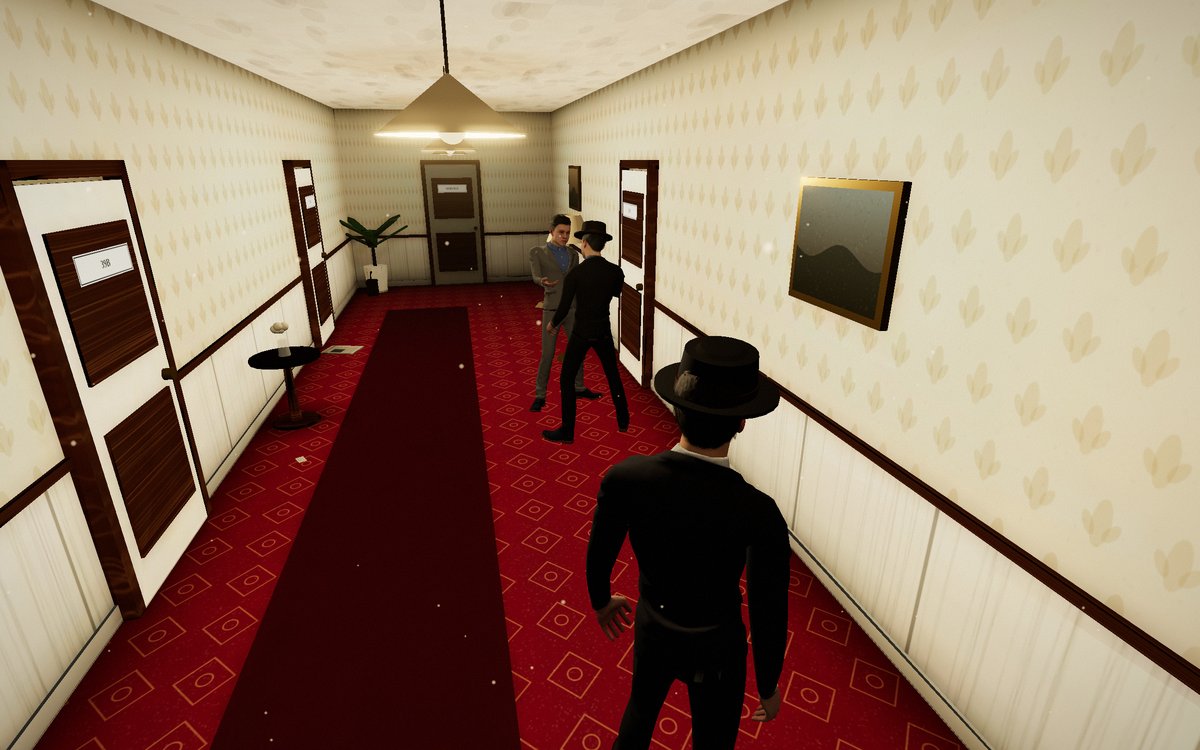
The Waldorf Suite escape room
Waldorf-Astoria, the 1930s. Lucky Luciano runs New York from the 39th floor. Walk the scene in 3D, read the real evidence and crack the padlock before the clock runs out.
Play in your browser →No download. Works on phone and desktop. Or start free at the Ravenite.or get the app: App Store · Google PlayLife in Exile
Luciano settled first in Sicily, then in Rome, and finally in Naples, where he lived for most of his remaining years. The FBI and Italian authorities kept him under close surveillance. American officials repeatedly frustrated his attempts to travel, and his requests to return to the United States on any basis were consistently refused.
He lived well — there were apartments in Naples, meals at good restaurants, the company of his long-term companion Igea Lissoni, a model and dancer whom he met shortly after arriving in Italy. But exile was exile. The social world he had built in America, the network that had made him the most consequential figure in the history of organised crime, was inaccessible.
Lissoni died of breast cancer in 1958. Luciano, by all accounts, never fully recovered from losing her.
The Documentary Filmmakers
In his final years, Luciano agreed to cooperate on an authorised biography with journalist Martin Gosch. The project had been in progress for some time when, on 26 January 1962, Luciano drove to Naples International Airport to meet Gosch and a film producer named Barnett Glassman, who had come from America to discuss a possible film of the book.
Luciano was 64 and in poor health — he had suffered at least one heart attack previously and had been warned by his doctor to rest. The meeting at the airport was brief. As he walked through the terminal with Gosch, Luciano collapsed. He died where he fell, before an ambulance could arrive.
The book, published posthumously as The Last Testament of Lucky Luciano, remains controversial — scholars continue to debate how much of it reflects genuine Luciano testimony and how much is embellishment. But the manner of his death, at an airport meeting to discuss his own legacy, has a certain dark symmetry to it.
Explore the world Luciano built in Five Families: Escape Rooms
What Luciano Left Behind
The structures Luciano put in place in 1931 — the Five Families of New York, the Commission, the modernisation of American organised crime along corporate lines — outlasted him by decades. The Genovese family, which he had led, continued to operate under his successors and remains one of the most significant criminal organisations in American history.
His personal estate was modest. He had lived comfortably in exile but had not accumulated the kind of wealth associated with his reputation. The FBI, which had monitored him for decades, estimated his assets in Italy at well under a million dollars.
His body was flown back to New York, where he was buried at St. John’s Cemetery in Queens — the same cemetery that would eventually hold the remains of Carlo Gambino, Paul Castellano, and John Gotti. He was the first of the great mid-century bosses to go.
Frequently Asked Questions
Where is Lucky Luciano buried?
Lucky Luciano is buried at St. John’s Cemetery in Middle Village, Queens, New York. His family had him brought back to the United States after his death in Naples, and he was interred in the family mausoleum.
Why was Lucky Luciano deported?
Luciano was deported to Italy in 1946 as a condition of having his prison sentence commuted. He had been imprisoned since 1936 on prostitution-related charges. His deportation was facilitated in part by his wartime cooperation with US Naval Intelligence, though the full extent of that cooperation has always been disputed.
Did Lucky Luciano ever return to the United States?
No. Luciano made repeated attempts to have his deportation order lifted or to obtain permission to visit the US, but all were refused. He died in Italy in 1962 having not set foot in America since his deportation in 1946.

