

Frankie Yale

Frankie Yale was the most powerful Italian-American racketeer in Brooklyn in the years either side of the First World War. Born Francesco Ioele in Calabria in 1893, and also known as Frankie Uale, he ran bootlegging, protection and vice rackets across south Brooklyn, and he is best remembered today as the man who gave the young Al Capone his first real job. He was shot dead in his car on a Brooklyn street on 1 July 1928, aged 35.
🎁 The NCS Christmas Gift Guide
Gifts for the
Mob-History Fan
Real gangsters, gold Art Deco. Printed to order and shipped from a print partner near them.
Shop the gift guide →

Order printed gifts by 10 December for Christmas · Ships worldwide
Yale sat at the meeting point of New York and Chicago crime. He came up under Johnny Torrio, employed Al Capone, and was suspected of carrying out killings in Chicago on behalf of the Chicago Outfit. In the end, according to most accounts, it was Capone who had him killed.

Full profile: Frankie Yale: Born On This Day in 1893
Quick facts
| Born | Francesco Ioele, 1893, Longobucco, Calabria, Italy |
| Also known as | Frankie Uale, Frankie Yale |
| Base | Brooklyn, New York |
| Rackets | Bootlegging, protection, gambling, brothels, ice delivery |
| Famous for | Owning the Harvard Inn, Coney Island, where Al Capone worked |
| Suspected of | The killings of Jim Colosimo (1920) and Dean O’Banion (1924) in Chicago; never charged |
| Died | 1 July 1928, Brooklyn, shot in his car, aged 35 |
| Buried | Holy Cross Cemetery, Brooklyn |
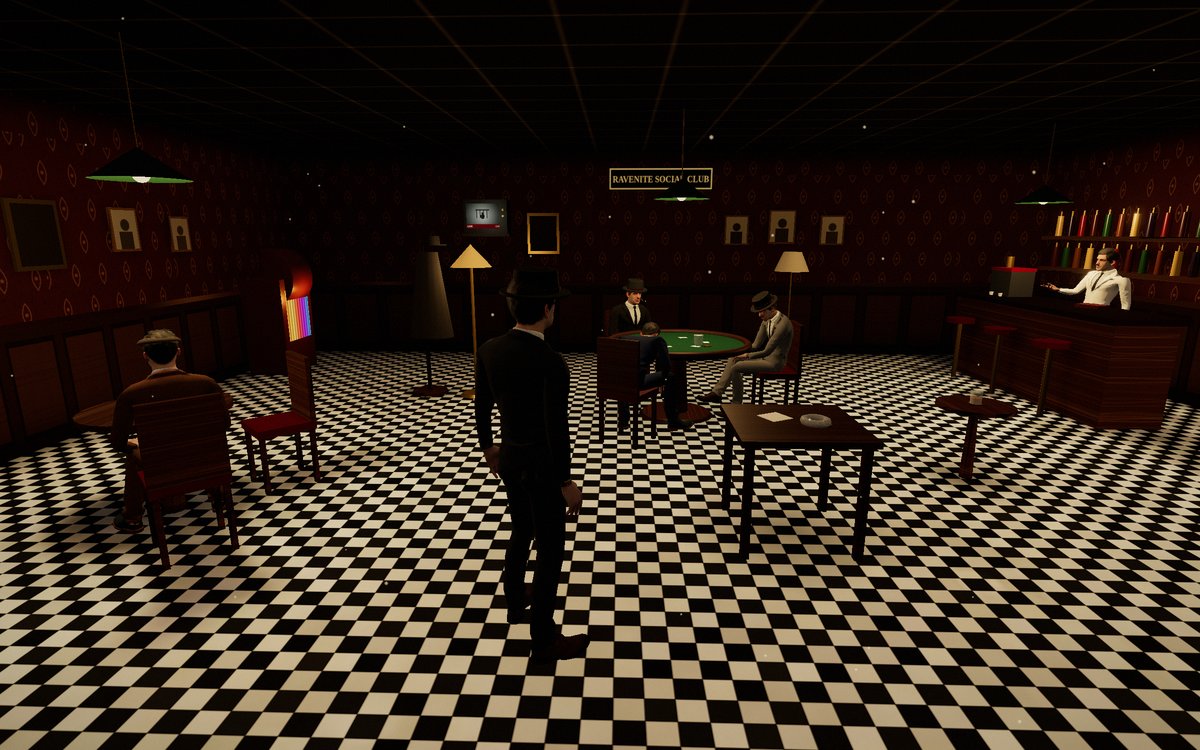
The Ravenite escape room
247 Mulberry Street, December 1989. The FBI hit the building next. Walk the scene in 3D, read the real evidence and crack the padlock before the clock runs out.
Play free in your browser →No download. Works on phone and desktop.or get the app: App Store · Google PlayEarly life
Francesco Ioele was born in 1893 in Longobucco, a mountain town in Calabria in southern Italy, and came to New York with his family as a child. Brooklyn’s Italian neighbourhoods were full of young men looking for a way up, and Ioele found his on the street.
As a teenager he fell in with the Five Points Gang, the big Lower Manhattan gang of the early 1900s, through Johnny Torrio, who was already running his own crew and had an eye for talent. When Torrio left for Chicago in 1909, Ioele stayed in Brooklyn and began building something of his own. Around this time he started calling himself Frankie Yale.
Coney Island and the Harvard Inn
Yale’s first big business was the Harvard Inn, a bar and dance hall on Seaside Walk at Coney Island. The name was a joke at the expense of the Ivy League: a dive bar called the Harvard, run by a man called Yale.

Among the young men who worked there in the late 1910s was a Brooklyn teenager named Alphonse Capone, employed as a bouncer and barman. It was at the Harvard Inn that Capone got the scars that gave him his nickname: he made a remark about a customer’s sister, and her brother, Frank Galluccio, cut his face. Capone worked for Yale for about two years before leaving for Chicago, where Torrio gave him work in the organisation of “Big Jim” Colosimo. Accounts differ on the exact year Capone left, but it was at the end of the 1910s.
Brooklyn’s rackets
Yale was more than a bar owner. By the 1920s he controlled a range of Brooklyn businesses, legal and illegal:
- Bootlegging. When Prohibition began in 1920, Yale became one of the biggest bootleggers in Brooklyn.
- Ice delivery. He controlled ice delivery in parts of Brooklyn.
- A funeral parlour. His family’s funeral home on 14th Avenue gave him a respectable front. He liked to tell people he was an undertaker.
- Cigars. He sold a brand of cigars with his own face on the box.
He also ran gambling and brothels, and his men worked as muscle in labour disputes.
Britannica describes Yale as national president of the Unione Siciliana, a Sicilian-American fraternal society that had been taken over by gangsters. Other historians say no real link between Yale and the Unione has ever been proven. Accounts differ, and we treat the claim with caution.
The Chicago killings
Yale’s name comes up in two of the most important murders in Chicago’s gang history.
Jim Colosimo, May 1920. Colosimo, the vice lord who ran the city’s South Side, was shot dead in his own café. He had been reluctant to move into bootlegging, and his death left the business to his deputy, Johnny Torrio. Chicago police suspected that Yale had come in from New York to do the shooting, but he was never charged. Read the full story: the death of Jim Colosimo.
Dean O’Banion, November 1924. On 10 November 1924, the North Side gang leader Dean O’Banion was shot dead in his flower shop. Yale is reputed to have been the man who shook O’Banion’s hand while two Outfit gunmen, John Scalise and Albert Anselmi, opened fire. He gave an alibi and was never charged. See who was Dean O’Banion and how did he get killed? and our piece on Anselmi, Scalise and Giunta.
O’Banion’s death started a long and bloody war between the North Siders and the Outfit, which you can follow in the Chicago Outfit during Prohibition.
The falling-out with Capone
By the mid-1920s Capone was running the Outfit, and Yale was one of his most important connections in the East: some of Capone’s liquor came through Yale’s Brooklyn territory.
In 1927 the relationship broke down. Capone’s trucks were being hijacked in Brooklyn, and he came to believe that Yale was behind it. Capone is said to have placed a man of his own, James DeAmato, inside Yale’s organisation to find out. DeAmato was shot dead on a Brooklyn street in July 1927. By then, it seems, Capone had his answer.
The murder of Frankie Yale, 1 July 1928
On the afternoon of Sunday 1 July 1928, Yale was driving his new Lincoln through Brooklyn when a car carrying several gunmen came up behind him. They chased him onto 44th Street, drew level and opened fire. Yale was killed, and his car ran up onto the stone steps of a house at No. 923.

The gunmen abandoned their car nearby. Inside, police found handguns, a sawed-off shotgun and a Thompson submachine gun that was traced to a dealer in Chicago. The killing is often described as the first time the “tommy gun” was used in a New York gang murder, though the post-mortem found that the fatal wounds came from a shotgun and a pistol.
Police linked the killing to Capone’s Chicago gunmen. Nobody was ever charged.
The funeral
Yale’s funeral was one of the most extravagant gangland send-offs New York had seen. He was laid out in a silver casket that reportedly cost more than $10,000 (figures differ between accounts), and the procession through Brooklyn ran to a couple of hundred cars, with many more loaded with flowers. Thousands of people lined the streets.
There was an awkward moment at the graveside: two women each arrived as his widow. Maria, whom he had married in the late 1910s, and Lucy (Lucienda), for whom he had left Maria, both mourned him in public. He was buried at Holy Cross Cemetery in Brooklyn, near the Ioele family plot. His Brooklyn rackets were divided up among other crews.
Legacy
Frankie Yale is often remembered as a footnote in the Capone story: the man who hired him, and the man he later turned on. That undersells him. For a decade Yale was the link between New York and Chicago crime, and the people who passed through his Coney Island bar went on to shape both cities. His murder was a clear sign that Capone’s reach now went well beyond Chicago.
More on Yale’s world
Read the stories of the two men who shaped his career, Johnny Torrio and Al Capone, our hub on the Chicago Outfit, and how Al Capone died. For more gangland murders, see our mob hits collection.

Want to step inside the story? Try our real crime-scene escape rooms in your browser: Five Families escape rooms.
FAQs
Who was Frankie Yale?
Frankie Yale, born Francesco Ioele in Calabria in 1893, was a Brooklyn racketeer and bootlegger. He owned the Harvard Inn at Coney Island, where Al Capone worked as a young man, and he was shot dead in Brooklyn on 1 July 1928.
What was Frankie Yale’s real name?
His real name was Francesco Ioele. He was also known as Frankie Uale before he adopted the name Yale.
How did Al Capone know Frankie Yale?
Capone worked for Yale as a bouncer and barman at the Harvard Inn in Coney Island in the late 1910s. He got the scars on his face there, before leaving for Chicago to work with Johnny Torrio.
Who killed Frankie Yale?
Nobody was ever charged. Police linked the killing to gunmen from Chicago, and most historians believe Al Capone ordered it after a dispute over hijacked liquor shipments.
How did Frankie Yale die?
He was shot dead while driving his car along 44th Street in Brooklyn on the afternoon of 1 July 1928, after gunmen in another car chased him and drew alongside. He was 35.
Where is Frankie Yale buried?
He is buried at Holy Cross Cemetery in Brooklyn, New York.
Did Frankie Yale kill Jim Colosimo?
Chicago police suspected him of shooting Colosimo in May 1920, but he was never charged, and the killing was never solved in court.