



Dutch Schultz: Biography of the Bronx Beer Baron
Quick answer
Dutch Schultz (1901–1935), born Arthur Flegenheimer, was the Bronx bootlegger who became New York’s beer baron during Prohibition and then seized the Harlem numbers racket. Hot-tempered and unpredictable, he survived two tax evasion trials in 1935, but when he insisted on murdering the prosecutor Thomas Dewey, the Mafia’s Commission had him shot at the Palace Chop House in Newark. He died the next day, 24 October 1935, aged 34.
Dutch Schultz: quick facts
| Born | Arthur Simon Flegenheimer, 6 August 1901, the Bronx, New York |
|---|---|
| Died | 24 October 1935, Newark City Hospital, New Jersey (aged 34) |
| Known for | Bronx beer baron in Prohibition; the Harlem numbers racket; the plot to kill Thomas Dewey |
| Associates | Bo Weinberg, Abe Landau, Lulu Rosenkrantz, Otto “Abbadabba” Berman |
| Rivals | Legs Diamond, Vincent “Mad Dog” Coll |
| Killed by | Murder, Inc. gunmen Charles “the Bug” Workman and Mendy Weiss, on the Commission’s orders |
| Buried | Gate of Heaven Cemetery, Hawthorne, Westchester County, New York |
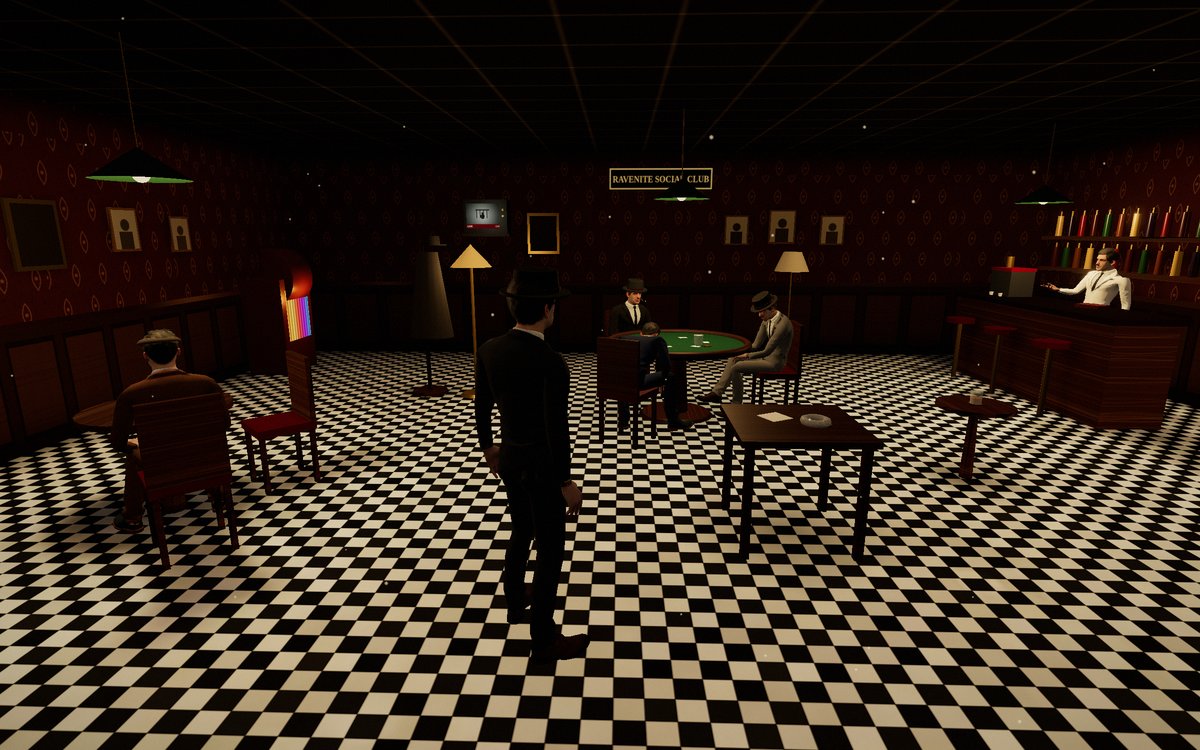
The Ravenite escape room
247 Mulberry Street, December 1989. The FBI hit the building next. Walk the scene in 3D, read the real evidence and crack the padlock before the clock runs out.
Play free in your browser →No download: it plays in your browser, best on a computer. Also on iPhone and Android.A Bronx boyhood
Arthur Flegenheimer was born on 6 August 1901 into a Jewish family in the Bronx. His father walked out when he was a boy, and Arthur left school in the eighth grade to help support his mother. For a few years he drifted through jobs at printing and shipping firms, but he was already running with neighbourhood gangs, and at 18 he was arrested for burglary. He served his sentence on Blackwell’s Island and a work farm on Long Island, and was paroled in December 1920. It was the only time he would ever serve in prison.
He came out with a new name. He took “Dutch Schultz” from an earlier Bronx tough, partly because it was short enough to fit in a headline. He later complained that if he had kept his real name, nobody would ever have heard of him.
Beer baron of the Bronx
Prohibition had just begun, and the Bronx was thirsty. Schultz started as a bouncer and driver, then went into partnership with a speakeasy owner, Joey Noe. Together they bought trucks, supplied their own beer and leaned on every saloon keeper in the borough to buy from them and nobody else. Those who refused were beaten, kidnapped or worse. By the late 1920s Schultz controlled most of the beer sold in the Bronx and large parts of upper Manhattan.
The money brought enemies. Joey Noe was shot in October 1928 and died the following month, a killing widely blamed on Jack “Legs” Diamond. Schultz’s war with Diamond dragged on until Diamond was shot dead in Albany in December 1931. A second war came from inside his own gang: Vincent “Mad Dog” Coll, a young Irish gunman who demanded a full partnership, broke away and started killing Schultz’s men. Coll was trapped in a drugstore phone booth on West 23rd Street and machine-gunned to death in February 1932.
The numbers racket and the restaurants
As Prohibition drew to a close, Schultz moved into the business that would outlast it: the Harlem numbers, an illegal daily lottery played for pennies by hundreds of thousands of people. He muscled out the independent Black and Latino bankers who had built the game, often by force, and turned it into a machine worth millions of dollars a year.
His secret weapon was his accountant, Otto “Abbadabba” Berman, a mathematical genius who could rig the winning number. The number was taken from the betting totals at the racetrack, and Berman worked out how to place late bets that steered the result away from the most heavily played numbers. Schultz also ran a protection racket over Manhattan restaurants through a phoney trade association, taking thousands of dollars a week from terrified owners.
The tax trials
In January 1933 Schultz was indicted for income tax evasion, the charge that had already sent Al Capone to prison. He went on the run for nearly two years before surrendering in Albany in November 1934. His lawyers won a change of venue, and his first trial, in Syracuse, ended in a hung jury in the spring of 1935.
The second trial was moved to the small town of Malone, near the Canadian border. Schultz arrived weeks early, spent freely, made friends with the townspeople and had himself received into the Catholic Church. In the summer of 1935 the jury acquitted him. Mayor Fiorello La Guardia announced that if Schultz came back to New York, he would be arrested on sight. Schultz moved his headquarters across the river to Newark.
Thomas Dewey and the Commission
While Schultz was in court, his rackets were coming apart. His lieutenant Bo Weinberg had been talking to the other bosses, and Weinberg disappeared in 1935, never to be seen again. A new special prosecutor, Thomas E. Dewey, had made Schultz his first target.
Schultz’s answer was to kill Dewey. He put the idea to the Commission, the council of bosses that Lucky Luciano had set up in 1931. The other bosses, led by Luciano, refused: murdering a prosecutor would bring down the whole country’s law enforcement on all of them. When Schultz said he would do it anyway, the Commission decided that Schultz himself had to go. The contract went to Louis “Lepke” Buchalter and the hit squad the newspapers would later call Murder, Inc.
The Palace Chop House
On the night of 23 October 1935 Schultz was in the back room of the Palace Chop House on East Park Street in Newark with Abe Landau, Lulu Rosenkrantz and Otto Berman, going over the numbers. Charles “the Bug” Workman and Mendy Weiss walked in. Workman found Schultz in the men’s room and shot him, then the two gunmen opened fire on the table. Berman, Landau and Rosenkrantz were all fatally wounded.
Schultz was taken to Newark City Hospital, where he lingered for almost a day. With a high fever he talked for hours while a police stenographer took down every word, a rambling stream of names, threats and fragments that writers have puzzled over ever since. He asked for a Catholic priest and received the last rites. He died on the evening of 24 October 1935, aged 34. The full story is in How did Dutch Schultz get killed?.
Aftermath and the buried treasure
Schultz was buried at Gate of Heaven Cemetery in Westchester, a Catholic cemetery, though his mother had his body wrapped in a Jewish prayer shawl. His rackets were taken over by the Luciano family, and Dewey, the man he had wanted dead, went on to convict Luciano in 1936 and become Governor of New York. Charles Workman was convicted of the murder in 1941 and served 23 years.
A legend grew that, shortly before he died, Schultz had a steel safe packed with millions of dollars in cash and bonds and buried somewhere in upstate New York, possibly near Phoenicia in the Catskills. Nobody has ever found it, and treasure hunters still go looking.
Why Dutch Schultz matters
Schultz was one of the last of the old-style gangsters: violent, flamboyant and impossible to control. His death showed that the new National Crime Syndicate would kill one of its own to protect the business, and that even the most powerful independent boss could not stand against the Commission. For more on the men who ordered his death, read the Lucky Luciano biography.
See also: Dutch Schultz was born, 6 August 1901 · Dutch Schultz died, 24 October 1935 · Did you know? Dutch Schultz
The best books on Dutch Schultz
As an Amazon Associate, NCS earns from qualifying purchases.