



Al Capone: Biography of Chicago’s Most Famous Gangster
Quick answer: Al Capone (1899–1947) was the Brooklyn-born gangster who ran the Chicago Outfit during Prohibition. He took over from Johnny Torrio in 1925, made the Outfit a bootlegging empire worth tens of millions of dollars a year, and was blamed for the St. Valentine’s Day Massacre in 1929. The government never convicted him of murder. It got him for tax evasion in 1931, and he served time in Atlanta and Alcatraz before syphilis wrecked his mind. He died at his Florida home on 25 January 1947, aged 48.
| Full name | Alphonse Gabriel Capone |
|---|---|
| Born | 17 January 1899, Brooklyn, New York |
| Died | 25 January 1947, Palm Island, Miami Beach, Florida (aged 48) |
| Nicknames | Scarface (which he hated), Snorky (which he liked), Big Al |
| Organisation | The Chicago Outfit (boss 1925–1931) |
| Headquarters | The Four Deuces, the Hawthorne Hotel in Cicero, then the Lexington Hotel |
| Convicted | Tax evasion, 17 October 1931 (11 years) |
| Prisons | Eastern State (1929–30), Atlanta (1932–34), Alcatraz (1934–39), Terminal Island (1939) |
| Family | Wife Mae Coughlin; son Albert Francis “Sonny” Capone; brothers including Frank, Ralph and Vincenzo |
| Buried | Mount Carmel Cemetery, Hillside, Illinois |
Who was Al Capone?
Ask anyone to name a gangster and the answer is usually Al Capone. For six years in the 1920s he was the most famous criminal in America: a bootlegger who gave interviews, wore tailored suits and handed out money to the poor, while his men fought a street war that left hundreds dead across Chicago. He was only 26 when he took control of the city’s biggest gang, and 32 when he went to prison. Everything people remember about him happened in that short window.
This page is the National Crime Syndicate guide to his whole life. Each section links to our full articles on the parts of the story people ask about most: how he died, what he was worth, his brothers, his rivals and the massacre that made him a national figure.
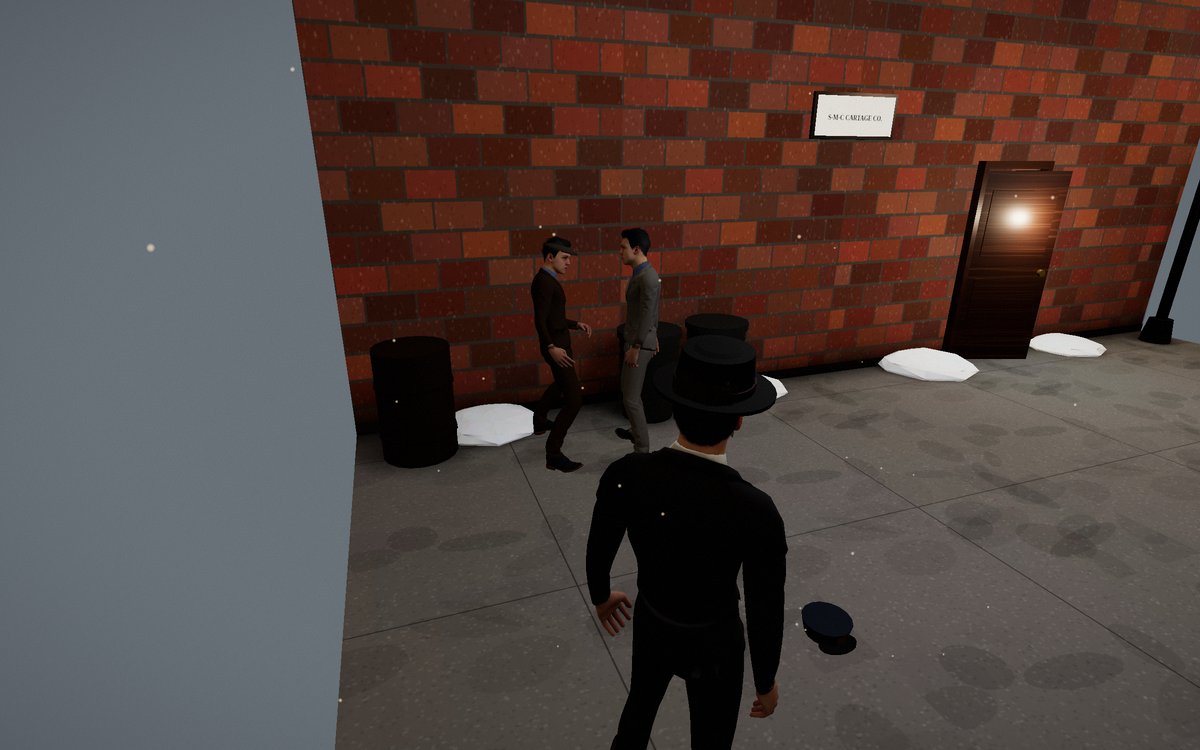
2122 North Clark escape room
Chicago, 14 February 1929. A garage on Clark Street. Walk the scene in 3D, read the real evidence and crack the padlock before the clock runs out.
Play the room →No download: it plays in your browser, best on a computer. Also on iPhone and Android.Early life in Brooklyn
Capone was born on 17 January 1899 in Brooklyn, the fourth of nine children of Gabriele and Teresa Capone, who had emigrated from near Naples. His father was a barber. Al left school at 14 after hitting a teacher and fell in with the street gangs of South Brooklyn, where he came under the wing of Johnny Torrio, a careful, businesslike gangster who would shape the rest of his life. Read more in the day Al Capone was born.
As a teenager he worked as a bouncer and bartender at the Harvard Inn on Coney Island, a dive owned by Frankie Yale. In 1917 he insulted a customer’s sister and her brother, Frank Galluccio, slashed his face three times. The scars gave him the nickname he hated for the rest of his life: Scarface. He told reporters they were war wounds. He never served in the war.
In December 1918 he married Mae Coughlin, weeks after the birth of their son, Albert Francis “Sonny” Capone.
Chicago and the rise to boss
Around 1920 Capone followed Torrio to Chicago. Torrio was running brothels and gambling for his uncle by marriage, Big Jim Colosimo, and Prohibition had just made beer and whisky the most profitable product in America. Colosimo was shot dead in May 1920, Torrio took over, and Capone rose fast, working out of the Four Deuces on South Wabash Avenue.
In 1924 the Outfit moved its base to Cicero, a suburb just outside the city limits and out of reach of the Chicago police. On election day, 1 April 1924, Capone’s older brother Frank was shot dead by police during a gunfight at a polling station. Read the full story of how Frank Capone died.
The North Side Gang, led by Dean O’Banion and then Hymie Weiss and Bugs Moran, was the Outfit’s great rival. In January 1925 they shot Torrio outside his home. He survived, retired, and handed everything to Capone. In September 1926 a convoy of North Side cars drove past the Hawthorne Hotel in Cicero and fired hundreds of rounds into it while Capone was having lunch. He was unhurt. Weiss was killed outside Holy Name Cathedral three weeks later.
For the full chain of command before and after him, see our Chicago Outfit leadership timeline and how Capone built a criminal empire during Prohibition.
The empire and the money
At its peak the Outfit controlled breweries, speakeasies, gambling dens, brothels and dog tracks across Chicago and Cicero, protected by paid-off police and politicians. Federal investigators later estimated the operation brought in around $100 million a year in the late 1920s. Capone’s own business card described him as a used furniture dealer.
He was a showman. He gave interviews, went to ball games and the opera, and in the winter of 1930–31 opened a soup kitchen that fed thousands of unemployed Chicagoans. Many ordinary people saw him as a Robin Hood figure. The city’s businessmen saw a man who had made Chicago a byword for gangland murder.
How much of that money was his, and where did it go? See Al Capone’s net worth and how he compares in the richest mob bosses in history.
The St. Valentine’s Day Massacre
On the morning of 14 February 1929, seven men from Bugs Moran’s North Side Gang were lined up against the wall of a garage at 2122 North Clark Street and machine-gunned by killers dressed as police officers. Moran himself arrived late and escaped. Capone was at his Florida home and nobody was ever convicted, but the massacre was blamed on him, and on his gunman Jack “Machine Gun” McGurn.
It was the moment the country turned. Newspapers that had treated Capone as a colourful rogue now called for him to be stopped, and President Herbert Hoover told his officials to get him.
You can stand in that garage yourself: the 2122 North Clark Street room in our Five Families escape rooms rebuilds the scene in 3D.
Prison in Philadelphia and Public Enemy No. 1
In May 1929, on his way home from a gangland conference in Atlantic City, Capone was arrested in Philadelphia for carrying a concealed gun. He was given a year and served most of it at Eastern State Penitentiary, where he was allowed a cell with rugs, a desk lamp, paintings and a radio. The cell is still shown to visitors today. He was released in March 1930, and the Chicago Crime Commission promptly named him Public Enemy No. 1.
The Untouchables and the tax case
Two federal teams went after him. Eliot Ness and his Prohibition agents, nicknamed the Untouchables, raided the Outfit’s breweries and cost it a fortune. But the case that finished Capone came from the Treasury. A 1927 Supreme Court ruling in the Sullivan case had decided that income from crime was still taxable, and IRS agent Frank Wilson spent two years piecing together evidence that Capone had a huge income and had never filed a return.
He was indicted in 1931. When investigators learned the jury had been got at, the judge swapped it for another panel on the morning of the trial. On 17 October 1931 Capone was convicted on five counts of tax evasion, and a week later he was sentenced to 11 years in federal prison and a $50,000 fine. His brother Ralph “Bottles” Capone had already been jailed for the same crime.
Atlanta and Alcatraz
Capone went to the federal penitentiary in Atlanta in May 1932. He kept running his affairs from inside, and in August 1934 he was moved to the new maximum-security prison on Alcatraz Island in San Francisco Bay, built for exactly the kind of prisoner who could buy his way round the rules.
On the Rock there were no favours. He was inmate AZ-85, worked in the laundry and played the banjo in the prison band. Other prisoners resented him and one stabbed him with a pair of scissors. And the syphilis he had caught as a young man was spreading to his brain. By the late 1930s he was confused and childlike for long stretches. In January 1939 he was moved to the federal prison at Terminal Island in California to finish his sentence, and he was released on 16 November 1939.
Decline and death
Capone never ran the Outfit again. Frank Nitti and the men around him had taken over long before. After treatment in a Baltimore hospital he retired to his house on Palm Island in Miami Beach, where he spent his last years with his family. Doctors said by the mid-1940s he had the mind of a 12-year-old.
On 21 January 1947 he had a stroke. He developed pneumonia and died of cardiac arrest on 25 January 1947, eight days after his 48th birthday. He was buried in Chicago at Mount Olivet Cemetery, and in 1950 his body was moved to Mount Carmel Cemetery in Hillside, Illinois. For the full story, the last photographs and the funeral, read How Did Al Capone Die?
Capone’s family
Capone was one of nine children, and several of his brothers followed him into the rackets. Frank (Salvatore) was killed by police in Cicero in 1924. Ralph “Bottles” Capone ran the Outfit’s beer and soft-drink business and went to prison for tax evasion. Vincenzo went the other way: he left home young, changed his name to Richard Hart and became a Prohibition agent in Nebraska. Al’s son Sonny lived a quiet life in Florida and later changed his surname. More in 10 things you didn’t know about Al Capone.
Legacy
Capone ran the Outfit for barely six years, yet he became the template for every movie gangster that followed, from Scarface in 1932 to The Untouchables in 1987. The Outfit he built outlived him by decades under Nitti, Paul Ricca and Tony Accardo. And the way he was caught changed law enforcement for good: from then on, prosecutors went after the money.
His last words have been argued over ever since. We cover them, with other famous mobsters’ final words, in 10 chilling last words uttered by mobsters.
Al Capone FAQ
How did Al Capone die?
He had a stroke on 21 January 1947, then developed pneumonia, and died of cardiac arrest on 25 January 1947 at his home on Palm Island, Miami Beach. Years of untreated syphilis had already destroyed much of his mental health. Full story here.
How old was Al Capone when he died?
48. He had turned 48 eight days before his death.
Did Al Capone die in Alcatraz?
No. He served about four and a half years on Alcatraz, from August 1934 to January 1939, then finished his sentence at Terminal Island and was released in November 1939. He died at home in Florida in 1947.
What was Al Capone convicted of?
Tax evasion. In October 1931 he was convicted on five counts and sentenced to 11 years. He was never convicted of murder or of any bootlegging charge that stuck.
Why was he called Scarface?
Because of three scars on the left side of his face, cut by Frank Galluccio in a fight at the Harvard Inn on Coney Island in 1917. He hated the name. Friends called him Snorky.
Was Al Capone in the St. Valentine’s Day Massacre?
He was in Florida that day, and no one was ever charged. Historians generally believe it was planned by his men, with Jack McGurn the likeliest organiser.
How much was Al Capone worth?
Nobody knows exactly, because he kept no records in his own name. Federal estimates put the Outfit’s income at around $100 million a year at its peak. See our full breakdown.
The best books on Al Capone
As an Amazon Associate, NCS earns from qualifying purchases.